DIRECT CURRENT CHARGING STATIONS MANUFACTURERS


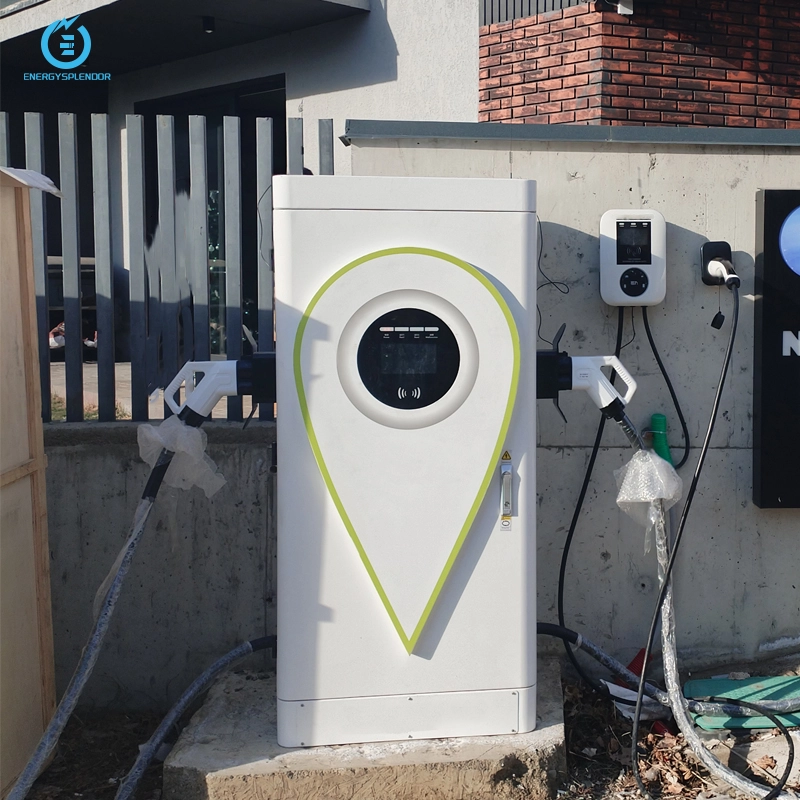

EV Charging Stations Manufacturer Dc Fast Charger GB/T CCS1 CCS2 CHAdeMO
Dimension:700*350*1800(L*W*T)
Weight:<500KG
Installation Method:Floor-mounted
Screen:7 Inch LCD Screen/LED Light
AC Input Voltage:AC380V±15% ,3P+N+PEAC
Output Voltage Range:CCS1/CCS2/GBT: 150Vdc –1000Vdc;
CHADEMO: 200Vdc –1000Vdc
Input Frequency:50Hz/60Hz
Charging Stands:IEC 61851-21-2:2021; IEC 61000-6-2:2019;
EN61000-6-4:2019; IEC 61851-1:2019; EN 61851-23:2014;
EN 61851-24:2014
Efficiency:≥95%
Power Factor:≥0.99(load:100%)
OCPP:1.6/2.0/2.0.1
Network Interface:Ethernet/4G
Working Temperature:-30℃~+55℃
Working Humidity:5%~95%
Electric Car Charging Stations Design
electric charging stations shell:
Our company has introduced intelligent digital production equipment from Germany, and robots process the charging station ใน ไทย shell, which is one-piece molded to ensure quality stability. At the same time, the factory also provides customized services for the shell. Send the design you want and our engineers will complete it.
ev charging stations LED Display:
7-inch screen display, four indicator lights indicate the status of the dc ev charging stations, and fully display the real-time charging data of electric vehicles.
Charging cable and charging plug:
Stable charging/Waterproof and flame retardant./Not easy to heat/More stable charging.
Charging cable cord, base length is 5M (can be customized).Use copper cables that comply with international standards,there are a variety of cable options.
TPU/TPE outer skin.
Special cable for charging equipment,strong and wer-resistant,easy to adapt to bad weather such as low temperature and high temperature.


Electric Car Charging Stations Are Compatible With 99% Of Electric Vehicles
Electric car charging stations are now compatible with 99% of electric vehicles, ensuring easy access for drivers. These stations, including Level 1, Level 2, and DC fast chargers, offer fast and convenient charging at home, work, or on the road. With widespread availability and universal connectors, EV owners can easily find a compatible station, making long trips and daily commutes hassle-free. The growing network of charging stations supports most popular brands, enhancing the overall EV experience and making electric cars a practical, sustainable choice for everyone.
Certified International Electric Charging Stations
Comply With The Most Demanding Technical Requirements
Integrated EMV contactless card reader
FHWA Buy American compliant options available
OCPP 2.0.1 certified
CTEP and NTEP compliant
ISO 15118 hardware-ready
Energy STAR certified and CE TUV listed


Our Commercial Electric Vehicle Charging Stations Is Easy To Install, Manage And Maintain, Which Means Less Work For You.
Maintenance of AC to DC ev charger power module:
It is a simple job, single-person operation, quick replacement.
IP54 protection level, good protection for the surface of the shell, maintenance-free.
The overall design can be quickly installed using a forklift.
Intelligent control panel, real-time monitoring feedback data, help you reduce maintenance work.
Professional Dc Ev Charging Stations Service
Before sales
Online remote service: The charging pile can be remotely debugged with your system to test whether your function can match our equipment. (PS: Sometimes due to network reasons, the test fails, and we will make appointments for multiple tests) Our current test pass rate is 100%.
After sales
Remote guidance for handling minor problems: When encountering some minor problems in installing and debugging equipment, we can support engineers to provide remote online guidance.
Offline service: Our engineers can also go to the site to guide and maintain car charging stations problems.

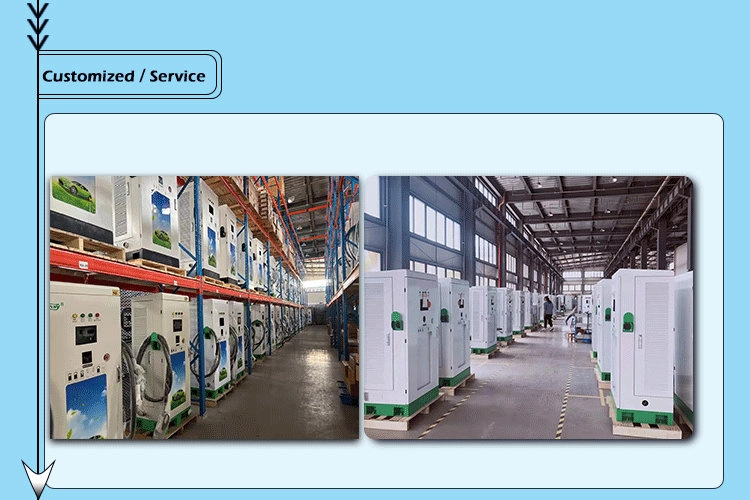
We Can Customize Ev Charging Station Business For Different Countries And Markets
We can customize electric car charging stations to meet the specific needs of different countries and markets. Whether it’s adapting to local electrical standards, offering multilingual interfaces, or ensuring compatibility with regional EV models, our solutions provide tailored charging infrastructure. We also consider factors like local regulations, grid capacities, and weather conditions to ensure optimal performance. This flexibility makes it easier for businesses, municipalities, and individual consumers to adopt EV technology, promoting sustainability and reducing barriers to widespread electric vehicle adoption worldwide.
I found fast charging stations near me, and they have made EV charging so much easier. The stations are quick, letting me charge up to 80% in around 30 minutes while I grab coffee or run errands. They are easy to use with clear screens and multiple payment options, making the process smooth every time. The location is convenient and the chargers are well-maintained, providing reliable service without long waiting times. Having these fast charging stations nearby has made driving and owning an EV much more practical and stress-free for daily use.
“วราภรณ์ นิตยา”
We started using Nissan electric charging stations for our EV fleet, and they have been excellent. The stations offer reliable and fast charging, allowing us to charge our Nissan EVs up to 80% within 30-40 minutes, keeping our operations efficient. They are easy to use, with clear instructions and flexible payment options for both staff and customers. The design is sleek and durable, performing well in different weather conditions. Since installing the Nissan charging stations, we have seen improved vehicle turnaround times and reduced waiting, making it a great investment for our business and customers.
“Herbert Hogan”
We installed what we consider the best EV charging station for our business, and it has transformed our customer service. The charging speed is excellent, allowing most EVs to reach 80% in 30-40 minutes, perfect for busy schedules. It’s easy to use with clear screens and supports multiple payment methods, making it convenient for all customers. The charger is reliable, durable, and operates well in any weather, ensuring consistent service. Since adding this EV charging station, we’ve seen increased customer traffic and satisfaction while supporting our sustainability goals.
“Donna Dawson”
We installed a Nissan charging station at our facility, and it has been a great addition for our customers and fleet. The charging speed is fast, allowing Nissan EVs to reach 80% in around 30-40 minutes, making it ideal for quick turnarounds. The interface is user-friendly with clear instructions and flexible payment options, making it easy for anyone to use. The charger is reliable and durable, performing well in all weather conditions. Since installation, we have seen more Nissan EV drivers visiting, and it has helped us improve our service while supporting green energy initiatives.
“Carlos Guzman”
We started using Tesla charging stations at our location, and they have been a fantastic upgrade. The charging speed is impressive, helping Tesla owners quickly charge up to 80% within 20-30 minutes, making it perfect for short stops. The stations are easy to use with a clear interface and seamless payment, providing a smooth charging experience for all drivers. They are reliable and well-built, operating efficiently even in tough weather conditions. Since adding Tesla charging stations, we have seen more EV drivers visiting our site, helping us improve customer satisfaction while supporting clean energy initiatives.
“Ruben Gregory”
We installed EV charging stations in Thailand, and they have been a valuable addition to our facility. The charging speed is excellent, allowing most EVs to reach 80% in about 30-40 minutes, which is perfect for customers on the go. The stations are user-friendly with clear instructions and easy payment options, making them accessible for everyone. They perform reliably even in Thailand’s hot and humid weather, ensuring stable operation all year round. Since installing the EV charging stations, we have seen increased customer visits and positive feedback, supporting our commitment to clean energy and customer convenience.
“สิทธิ์ สิริวัฒน์”
How Long Does It Take To Charge An Electric Car At A Public Charging Station?
The charging time at public stations in Thailand depends on:
✅ Charger type (AC or DC, power level)
✅ Your EV’s battery size and current charge
✅ The vehicle’s maximum charging acceptance rate
⚡ Typical charging times in Thailand:
🔹 AC Level 2 (7–22 kW)
Widely installed at department stores (Central, Lotus), offices, and condos
Takes 2–8 hours for a full charge
Adds 20–40 km of range per hour
Suitable for charging while shopping or during work hours
🔹 DC Fast Charging (50–180+ kW)
Available along major routes (Bangkok–Pattaya, Bangkok–Chiang Mai) and PTT stations
Takes 20–45 minutes to charge from 20% to 80%
Adds 100–300 km range in 30 minutes
Ideal for long-distance travel or fleet top-up
🚗 In Thailand:
Thailand’s EV infrastructure is expanding rapidly, with government and private operators (PTT, EA Anywhere, Evolt) rolling out DC fast chargers across highways and major cities. Many EV users plan charging stops at shopping centers or PTT stations with cafes and clean amenities, making it convenient to charge while taking a break.
✅ Summary:
In Thailand, it typically takes 30 minutes to 8 hours to charge an electric car at a public charging station, depending on the charger type and your EV.
💰 How Much Does It Cost To Use A Charging Point?
The cost to use a public EV charging station varies by:
✅ Country and local electricity rates
✅ Charging speed (AC or DC fast charging)
✅ Charging operator pricing model (per kWh, per minute, or session fee)
⚡ Typical Pricing:
🔹 AC Level 2 Charging (7–22 kW)
Charged per kWh or per hour
Typically $0.15–$0.30 per kWh in many countries
A full charge (30–60 kWh) may cost $5–$15
🔹 DC Fast Charging (50–180+ kW)
Charged per kWh, per minute, or session fee
Typically $0.30–$0.60 per kWh
A typical 20%–80% charge (30–40 kWh) may cost $10–$20
🚗 Example: Thailand
In Thailand:
✅ AC charging typically costs 4–7 THB per kWh (~$0.11–$0.19/kWh) at public stations.
✅ DC fast charging typically costs 6–9 THB per kWh (~$0.16–$0.25/kWh) at EA Anywhere, PTT, or Evolt stations.
✅ Charging from 20%–80% (30 kWh) at a DC fast charger would cost around 180–270 THB (~$5–$7.50).
Many locations (malls, condos) offer free or discounted AC charging to attract customers.
Other Factors:
✅ Some stations add parking or idle fees if you stay after charging completes.
✅ Home charging is often cheaper, but public fast charging offers speed and convenience.
✅ Summary:
The cost to use a public charging point typically ranges from $5–$20 per session, depending on your vehicle, charger type, and local electricity rates.
How Much Do Charging Stations Cost To Make?
The cost to install a charging station depends on:
✅ Charger type (AC vs. DC fast charging)
✅ Power level (kW rating)
✅ Site preparation (electrical upgrades, trenching, permits)
✅ Hardware, software, and network integration
⚡ Typical Costs:
🔹 AC Level 2 Chargers (7–22 kW)
Hardware: $500–$3,000 per unit
Installation: $1,000–$5,000 (depends on wiring, panel upgrades, distance to breaker)
Total: $1,500–$8,000 per charging point
Ideal for malls, condos, offices, and hotels
🔹 DC Fast Chargers (30–180+ kW)
Hardware: $10,000–$100,000+ per unit (higher for ultra-fast 350 kW units)
Installation: $10,000–$50,000+ (requires heavy wiring, transformer upgrades, sometimes utility coordination)
Total: $30,000–$150,000+ per charging point
Suitable for highways, commercial fleets, and fast-turnover public sites
🚗 Example: Thailand
In Thailand:
✅ AC charging points in malls or offices typically cost ฿50,000–฿250,000 ($1,400–$7,000) per port to install.
✅ DC fast charging stations cost ฿1,000,000–฿4,500,000 ($28,000–$125,000) depending on power level and site complexity.
✅ Additional costs for software, OCPP integration, branding, and payment systems are required for public operation.
Other Cost Considerations:
✅ Utility connection upgrades or new transformer installation can add significant costs for high-power DC chargers.
✅ Permits and regulatory fees vary by city/country.
✅ Ongoing maintenance, electricity, and network fees should be included in your business plan.
✅ Summary:
AC chargers: $1,500–$8,000 per port to install
DC fast chargers: $30,000–$150,000+ per port to install
Costs vary based on location, power level, and site conditions.
⚡ Charging Stations vs. ⛽ Gas Stations
| Aspect | Charging Stations | Gas Stations |
|---|---|---|
| Energy Source | Electricity (often with renewables integration) | Gasoline/Diesel (fossil fuels) |
| Refueling Time | 30 min – 8 hrs (DC fast: 15–45 min; AC: 2–8 hrs) | 3–5 minutes |
| Infrastructure Cost | $1,500–$150,000 per port | $250,000–$2M+ per station |
| Maintenance | Low (electronics, cables) | High (pumps, tanks, environmental risk) |
| Environmental Impact | Zero tailpipe emissions, cleaner grid use | High CO₂ and pollution emissions |
| Operation Noise & Smell | Silent, clean | Noisy, fuel odors |
| Refueling Method | Park & plug in, can leave to shop/eat | Must stay during fueling |
| Space Requirements | Flexible, can be integrated in parking lots | Larger land footprint needed |
| Energy Price Volatility | Relatively stable electricity pricing | Fluctuates with oil markets |
| Profit Model | Charging fees, attracts customers to spend time | Fuel sales, convenience store revenue |
| Grid Dependency | Dependent on electricity availability | Dependent on fuel logistics |
🚗 User Experience Differences:
Gas Stations:
✅ Very quick refueling
✅ Required for ICE vehicles
❌ Pollution and noise
Charging Stations:
✅ Can charge while shopping, eating, or working
✅ Supports clean transport goals
❌ Longer refueling times, especially on long trips
🌿 Sustainability:
Charging stations align with clean energy policies and ESG goals.
Gas stations contribute significantly to carbon emissions.
⚡ Transition Trend:
Many gas stations are adding EV charging stations to adapt to the EV market shift, using existing locations to host DC fast chargers and attract EV users for additional services.
✅ Summary:
While gas stations are faster for refueling, EV charging stations are cleaner, quieter, and align with future transport trends, with charging integrated into user lifestyles rather than requiring dedicated refueling trips.
📱 What is a Charging Stations App?
A charging stations app helps EV drivers locate, access, and manage electric vehicle charging stations conveniently from their mobile devices.
🚗 Key Features:
✅ Station Locator
Map view of nearby AC and DC charging stations
Filters by connector type (CCS, CHAdeMO, Type 2), power level, and availability
Displays pricing, hours, and amenities (restrooms, cafes)
✅ Real-Time Status
Shows whether chargers are occupied or available
Estimated waiting times at busy stations
✅ Navigation Integration
Route planning with charging stops included
Google Maps or Apple Maps integration
✅ Authentication & Payment
Start and stop charging sessions directly from the app
Pay using credit card, digital wallets, or app wallet balance
View session cost and charging history
✅ Notifications
Alerts when charging is complete or if there’s an issue
Maintenance or availability updates for favorite stations
✅ User Reviews & Ratings
Feedback on station functionality and safety
✅ Membership & Discounts
Membership plans for discounted charging rates
⚡ Examples of Charging Station Apps:
PlugShare – Global station database with user reviews
ChargePoint – Network-specific app for finding and using ChargePoint stations
EVgo, Electrify America – For their respective fast-charging networks
EA Anywhere (Thailand) – Local app for finding and using EA’s charging stations
Shell Recharge – Integrated with Shell’s global charging network
Tesla App – For Tesla Superchargers and vehicle management
🚩 Why It Matters:
A charging stations app:
✅ Removes range anxiety by showing available charging options
✅ Speeds up charging workflows for drivers
✅ Enhances payment and charging management for station operators
✅ Enables smart route planning for longer trips
✅ Summary:
A charging stations app makes EV charging more convenient by allowing users to find, access, and pay for charging easily, improving the EV ownership experience.
⚡ Charging Stations Business: An Overview
A charging stations business involves building, operating, and maintaining EV charging infrastructure to support the growing electric vehicle market while generating revenue through charging services and related offerings.
🚀 Why Enter the Charging Stations Business?
✅ Rising EV Adoption: EV sales are increasing globally, creating consistent demand for public and fleet charging.
✅ Government Support: Many countries (including Thailand, Philippines, US, EU) offer subsidies, tax incentives, and policy support for EV infrastructure.
✅ Sustainable Business: Aligns with ESG goals, clean transport, and carbon reduction trends.
✅ Recurring Revenue: Generates ongoing income from charging fees, memberships, advertising, and partnerships.
💰 Revenue Streams
1️⃣ Per-kWh Charging Fees: Core revenue from users paying to charge.
2️⃣ Time-Based Fees: Charging by duration (per minute/hour).
3️⃣ Idle Fees: Additional income if users occupy chargers post-charging.
4️⃣ Membership Plans: Monthly subscriptions for discounted rates.
5️⃣ Advertising & Partnerships: On-app or on-site promotions, cross-selling with malls or F&B partners.
6️⃣ Ancillary Services: Car wash, maintenance, battery checks while charging.
⚡ Types of Business Models
✅ Owner-Operator: You install, own, and manage the stations, keeping all revenue.
✅ Host Site Partnership: Malls, offices, or gas stations provide space; you install and share revenue.
✅ Franchise Model: Using established EV charging brands and networks.
✅ Network Operator: Managing payment, monitoring, and maintenance for multiple owners under one platform.
🚧 Key Costs
Hardware: $1,500–$150,000 per charger (AC vs. DC fast charging).
Installation: Site preparation, electrical upgrades, permits.
Software & OCPP Platform: For monitoring, payments, remote updates.
Maintenance & Electricity: Ongoing operational costs.
Land Lease/Rental: If not owned.
🚗 Market Considerations
✅ Location is critical: High-traffic areas (malls, highways, city centers, offices) maximize utilization.
✅ Charging speed mix: Combine AC for long-stay parking and DC fast chargers for high turnover.
✅ Grid capacity: Ensure your sites can handle power demand without disruptions.
✅ App/payment integration: Users prefer seamless, app-based experiences.
✅ Future-proof: Plan for renewable integration, V2G readiness, and scalable power upgrades.
🌿 Example: Thailand & Philippines Context
Thailand: Government policies supporting EV infrastructure with EA Anywhere, PTT, and Evolt rapidly expanding charging networks.
Philippines: Early-stage growth, high fuel prices driving interest, with AC chargers in malls and DC chargers in Metro Manila and Cebu, supported by renewable energy potential.
✅ Summary:
A charging stations business offers sustainable, scalable income potential in a rapidly growing EV market, aligning with clean energy goals while meeting practical user needs.