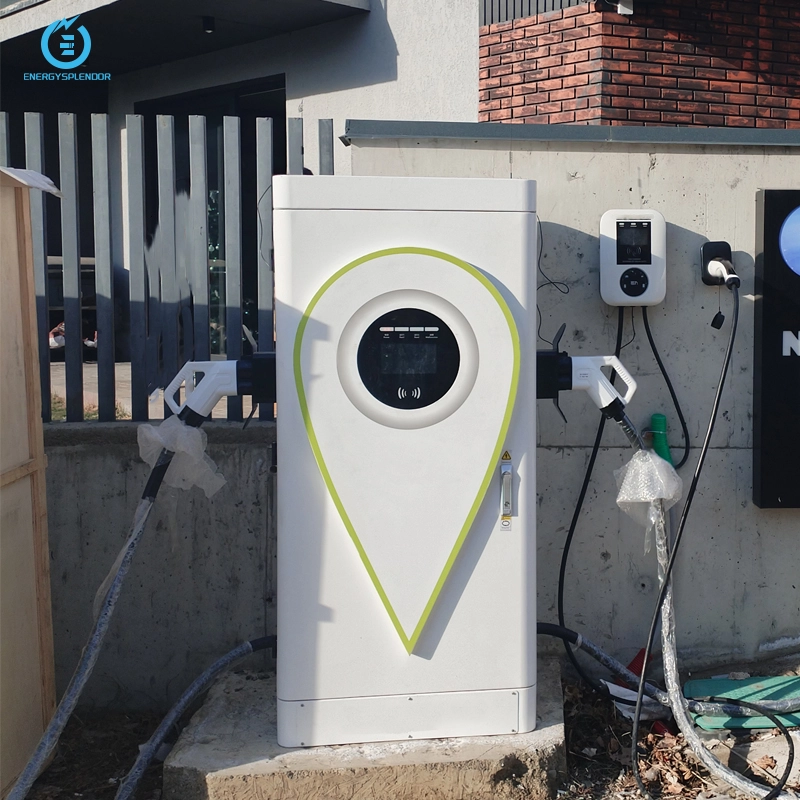
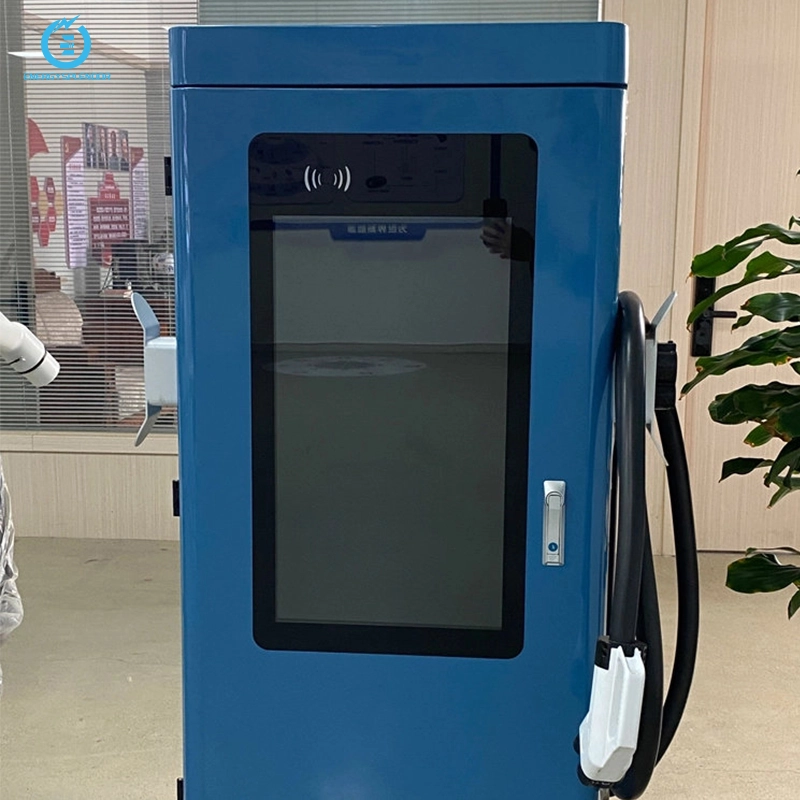
DIRECT CURRENT CHARGING STATIONS MANUFACTURERS


Commercial EV Charger-320KW 360KW Super Fast Charging
Rated power:320kW/360kW
Installation method:Vertical
Feeding method:Bottom in and out
Equipment size:1000*900*1850mm
Input voltage :380VAC ±15%
Input frequency:45-65Hz
Output voltage:DC200-1000V
Output current:0-200A
Charging cable length:5m
Accuracy:Level 1.0
Efficiency;≥95%
Human-computer interaction;7-inch bright colortouch screen,LED Indicator
Charge mode:Automatic charging full / Fixed power / Fixed Amount / Fixed time
Charging method:Swipe Card / Scan code
Networking methods:Ethernet/4G
Executive standards:IEC 61851-1:2017;1EC 62196-2:2016
Working enviroment:Altitude: ≤2000m;Temperature:-20°C~+50°C ;
Protection level:IP54
Noise:Forced air cooling
MTBF:17520h
Commercial EV Charging Station Details
The commercial EV charging station is designed for high-traffic locations and large-scale charging demands, offering super DC fast charging with power levels of 320kW and 360kW. This ultra-fast charging capacity enables electric vehicles to be charged to 80% in as little as 15–20 minutes, making it ideal for highway rest stops, urban charging hubs, logistics fleets, and public transportation terminals.
Built with advanced power modules and intelligent distribution technology, the station supports dynamic power allocation, ensuring stable and efficient performance even during peak usage. Its multi-standard support—compatible with CCS1, CCS2, CHAdeMO, and GB/T—allows seamless service for nearly all EV models on the market.
The system also features real-time monitoring, OCPP compatibility, and remote diagnostics, helping operators manage energy usage, optimize charging schedules, and reduce maintenance costs. With robust industrial design and high protection ratings, this 320kW/360kW commercial EV charging station is a future-ready solution for fast, safe, and scalable EV infrastructure.


Commercial EV Charging Meets The Requirements Of 99% Of Vehicle Models
Our commercial EV charging solutions are designed to meet the diverse demands of today’s electric vehicle market, offering broad compatibility with 99% of vehicle models globally. Supporting multiple charging standards—CCS1, CCS2, CHAdeMO, and GB/T—our chargers ensure seamless operation across European, American, Japanese, and Chinese EVs, including popular brands like Tesla (with adapter), BMW, Nissan, BYD, Hyundai, and Volkswagen.
Including high-power options up to 360kW, these commercial charging stations are ideal for use in shopping centers, office buildings, logistics parks, and highway networks. Whether it’s fast fleet turnaround or public convenience, our chargers provide reliable, safe, and efficient power delivery.
With features like OCPP backend integration, smart load balancing, real-time monitoring, and multi-gun output, our systems are built for scalability and future growth. Choose a solution that’s ready for mass EV adoption—commercial EV charging that truly meets the needs of 99% of vehicles on the road.
High-Quality Commercial EV Charging Stations
Our high-quality commercial EV charging stations are manufactured in strict compliance with international safety and performance standards. Each unit is certified with CE, TUV, and other globally recognized certifications, ensuring reliability and trustworthiness across various markets.
Designed for demanding commercial environments, these stations feature multiple layers of protection, including overvoltage, undervoltage, overcurrent, short circuit, overheating, and leakage safeguards. This guarantees secure and stable operation for both the user and the electric vehicle.
In addition to safety, our chargers are built with multi-functional capabilities such as OCPP protocol support, RFID authentication, smart scheduling, and compatibility with mobile app control or centralized management systems. Whether deployed in public parking lots, commercial fleets, or EV service hubs, these charging stations deliver durable, intelligent, and scalable power solutions that meet modern EV charging needs with confidence.


EV Charger Commercial Simple Maintenance
Our EV charger commercial models are engineered for simple maintenance and long-term reliability, reducing downtime and operational costs for businesses. Each unit features a modular design, allowing for quick plug-and-play replacement of internal components—no complex tools or multi-person teams required. This ensures that maintenance can be performed easily and efficiently, even on-site.
With an IP54 protection rating, the charger is built to resist dust, rain, and challenging outdoor conditions, making it ideal for commercial environments. Advanced intelligent monitoring systems are integrated into the control board, which automatically reports real-time equipment status and sends alerts for abnormal conditions, allowing for fast diagnostics and remote support.
Whether you’re managing a charging station network or operating a single commercial site, our EV chargers offer reliable performance with minimal maintenance burden, helping to keep your business running smoothly.
Commercial EV Charging Stations For Sale
Looking for commercial EV charging stations for sale? Our high-performance DC and AC chargers are designed for reliability, scalability, and wide vehicle compatibility—supporting 99% of electric vehicle models globally. From 60kW to 360kW, our chargers are ideal for commercial parking lots, highway service areas, fleet depots, and EV infrastructure projects.
Each station is equipped with OCPP 1.6/2.0 compatibility, multiple charging connectors (CCS1, CCS2, CHAdeMO, Type 2), and smart monitoring systems for real-time data tracking. Certified with CE, TUV, and built with premium components from trusted brands like Schneider and Chint, our chargers offer dependable performance and safety protections including overload, short-circuit, and temperature control.
As a manufacturer, Anengjienergy supports full customization—logo, color, language, UI, and payment system integration—to meet your specific business or regional needs. Partner with us to deploy a reliable and future-proof commercial EV charging solution.


Custom Commercial EV Charging Station For Sale
Looking for a custom commercial EV charging station for sale? Our solutions are designed to meet diverse commercial demands with flexibility in design, power, and functionality. Whether you operate a public charging network, fleet depot, or retail location, we offer customized chargers ranging from 60kW to 360kW, supporting dual or triple gun configurations (CCS, CHAdeMO, Type 2, etc.).
You can personalize your charging station with custom logos, colors, interface languages, payment options (RFID, credit card, QR code), and even the charging strategy (automatic full charge, fixed kWh, fixed time, etc.). Our stations are OCPP 1.6/2.0 compatible, ensuring seamless integration with existing management platforms.
With CE, TUV certifications, robust protection features, and smart remote monitoring, our EV chargers are built for safety, efficiency, and brand consistency. Partner with Anengjienergy, a trusted manufacturer, to get a commercial EV charger tailored to your business needs.
As a commercial EV charging solutions provider, we’ve deployed various brands and models, and can confidently say that the best commercial EV charging stations offer a perfect balance of performance, durability, and smart management features. These stations typically support both AC and DC fast charging, with output capacities ranging from 22kW to 480kW, making them suitable for retail centers, fleet depots, and highway rest areas. The modular design allows for easy maintenance and scalability, while OCPP compliance ensures seamless backend integration for billing, remote diagnostics, and user management. Our clients value the robust build, intuitive UI, and multi-protocol support (CCS, CHAdeMO, GBT), which ensure compatibility with 99% of EVs on the market. In addition, advanced features like load balancing and dynamic power allocation help reduce energy costs and support sustainable operations. These commercial EV chargers consistently deliver high uptime, user satisfaction, and operational efficiency — making them a top-tier investment for any EV charging network.
GianfrancescoSpadafora
As a charging station developer, we’ve worked with numerous EV charging commercial solutions, and the performance of top-tier commercial chargers has exceeded expectations. These systems are built for high-traffic environments like shopping malls, parking complexes, and fleet hubs, supporting both AC and DC charging with outputs up to 480kW. They feature robust construction, IP55+ weather protection, and excellent thermal management for continuous operation. Integration with backend platforms via OCPP enables real-time monitoring, remote troubleshooting, and dynamic load balancing—crucial for operational efficiency. Commercial clients appreciate the scalability and plug compatibility (CCS, CHAdeMO, GBT), allowing seamless service for nearly all EV brands. With high uptime, easy maintenance, and revenue-generating capabilities through smart billing, these commercial EV chargers represent a strong ROI and long-term infrastructure value.
GianmarcoFantozzi
We’ve integrated EV commercial charging stations across multiple large-scale projects, including retail parks, logistics hubs, and highway service areas. These chargers deliver exceptional performance with output capacities from 60kW up to 480kW, supporting all mainstream standards like CCS, CHAdeMO, and GBT. Built with industrial-grade materials and equipped with advanced thermal and overload protection, they ensure long-term outdoor reliability. From an operational standpoint, OCPP-based connectivity allows remote control, load management, and energy monitoring — simplifying both billing and maintenance. Our partners value their modular design, easy installation, and compatibility with various EV models. These commercial charging stations have helped us meet increasing EV demand while ensuring fast turnaround, reduced downtime, and strong ROI for operators.
IlariaParpinel
We have successfully deployed numerous EV charging stations commercial-grade in various projects, including shopping centers, office complexes, and fleet depots. These stations support both AC and DC fast charging, with flexible power outputs ranging from 22kW to 480kW, meeting the needs of diverse applications. The rugged design ensures durability in outdoor environments, while smart features such as OCPP protocol compatibility allow seamless backend integration for real-time monitoring, user management, and dynamic load balancing. Our commercial clients appreciate the wide protocol support, including CCS, CHAdeMO, and GB/T, ensuring compatibility with most EV models on the market. The modular construction simplifies maintenance and future scalability, reducing downtime and operational costs. Overall, these commercial EV charging stations deliver high reliability, fast charging speeds, and excellent user experience—making them a top choice for businesses expanding their EV infrastructure.
GiadaBasso
We recently completed several commercial EV charger installations for retail centers and fleet depots using this reliable charger model. The installation process was straightforward thanks to the charger’s modular design and clear technical documentation. Its compatibility with both AC and DC charging, as well as multiple connector standards like CCS, CHAdeMO, and GB/T, made integration seamless across diverse vehicle fleets. Our installation teams appreciated the flexible mounting options—wall-mounted or pedestal—and the robust build quality, which ensures long-term durability in outdoor environments. The chargers come with OCPP support, enabling easy connection to backend management systems for remote monitoring, billing, and maintenance scheduling. From an operator’s perspective, this commercial EV charger installation solution minimizes downtime and maximizes uptime, delivering a superior charging experience for end users. The overall project workflow and client feedback have been excellent, making this charger a preferred choice for large-scale commercial deployments.
RaffaeleTraetta
Our company has implemented various commercial EV charging solutions across retail parks, office complexes, and public transportation hubs. These solutions feature versatile charging options, including Level 2 AC chargers and high-power DC fast chargers up to 480kW, accommodating a wide range of EV models. The systems are designed with modular hardware for easy scalability and maintenance, minimizing operational downtime. Integration with OCPP-compliant backend platforms enables real-time monitoring, user authentication, and smart billing—enhancing management efficiency. Our commercial clients appreciate the robust construction, weather resistance, and flexible installation options that suit indoor and outdoor environments. Additionally, advanced features such as load balancing and dynamic power distribution help optimize energy use and reduce costs. By deploying these commercial EV charging solutions, businesses can future-proof their infrastructure, meet increasing EV demand, and offer reliable, fast charging services that improve customer satisfaction and operational ROI.
GalassoRegge
How Much Does A Commercial Ev Charging Station Cost?
Cost Overview: Commercial EV Charging Stations
Level 2 AC Chargers (7–22 kW per port)
Hardware & equipment: ~$1,000–$6,500
Installation & site prep: ~$2,000–$12,700
Total upfront cost per port: $3,500–$15,000
DC Fast Chargers (Level 3; 50–350 kW)
Hardware & equipment: ~$10,000–$50,000 (can exceed $100,000 for high-power units)
Installation (electrical upgrades, transformer, trenching, utility connection): ~$10,000–$50,000+
Total upfront cost per port: $30,000–$150,000+, with premium high-capacity installations potentially exceeding $200k–$350k
Additional Cost Components
Annual & Recurring Costs
Software/network fees: $200–$1,000/year per charger
Maintenance & repairs: Level 2: $400–$1,000/year | DC: $1,000–$3,000/year.
Permits, Inspections & Compliance
Permitting fees & inspections: typically $500–$3,500 depending on jurisdiction.
Power Infrastructure Upgrades
Costs may range significantly:
Panel, transformer or feeder upgrades: $2,000–$50,000 or more
Major infrastructure (e.g. utility connection, demand charge considerations): higher for DC installations
Cost Summary
| Charger Type | Upfront Cost per Port | Annual Operating Costs |
|---|---|---|
| Level 2 AC | $3,500–$15,000 | $700–$1,500/year |
| DC Fast Charger | $30,000–$150,000+ | $1,500–$4,000/year |
Key Variables to Consider
Site Conditions: Distance to electrical panel, trenching, access limitations, ADA requirements.
Power Availability: Upgrades needed for three-phase 480 V service impact DC charger costs heavily.
Permits & Utility Coordination: Costs vary by region, need local expertise.
Funding & Incentives: Federal tax credits (up to 30%), state and utility rebates can offset hardware and installation costs (often up to thousands per port).
Scale & Utilization: Economies of scale reduce per-port cost; low utilization (common for DCFC) impacts ROI and energy price per kWh.
Best Practice Recommendations (2B Perspective)
Level 2 AC chargers are ideal for businesses needing low-cost, high-volume deployments (e.g., workspace, retail, hotels).
DC Fast Chargers should be considered only for high-traffic locations, fleet depots, or highway stations where rapid turnaround is needed.
Plan for maintenance and network subscriptions early to avoid surprises.
Maximize available incentives and align your project timelines accordingly to secure maximum funding support.
How To Install A Commercial Ev Charging Station?
Installing a commercial EV charging station involves careful planning, permitting, equipment selection, and coordination with licensed electricians and utility providers. Below is a step-by-step guide tailored for charging station engineers, wholesalers, and operators (2B audience):
Step-by-Step: How to Install a Commercial EV Charging Station
1. Site Selection & Assessment
Choose a strategic location:
High vehicle traffic (e.g., malls, office parks, gas stations)
Sufficient parking space
Accessibility and ADA compliance
Perform a site evaluation:
Distance from power supply
Electrical capacity (voltage, panel load)
Trenching or conduit requirements
Internet/cellular access for smart chargers
Tip: Use load assessment tools or request a load analysis from your utility.
2. Design & Planning
Determine the number and type of chargers:
AC chargers (7–22 kW): longer parking durations
DC fast chargers (30–350 kW): short-duration stops
Choose plug types: Type 2, CCS, CHAdeMO, NACS (depending on target users/region)
Consider modularity for future scaling
Deliverables: Site layout, electrical diagram, charger locations, signage plan
3. Coordinate with Utility Provider
Submit a service request to local utility
Review:
Transformer needs
Load increase approval
Metering and demand charge impact
Construction timeline
Pro tip: Some utilities offer rebates and infrastructure cost-sharing.
4. Obtain Permits & Approvals
Apply for:
Electrical permits
Zoning approvals
Environmental review (if required)
Submit to:
Local city planning office
Building inspection departments
Permit processing time: typically 2–8 weeks
5. Procure Hardware & Equipment
Purchase commercial-grade EV chargers:
Networked (OCPP 1.6 or 2.0 compatible)
Weatherproof (IP55+)
CE, TUV, UL certifications
Order supporting components:
Pedestals, cable holders, bollards, signage
Network routers, smart meters, payment terminals
6. Electrical Work & Civil Engineering
Performed by licensed contractors:
Trenching & conduit installation
Wiring & breaker panel upgrades
New transformer or meter (if needed)
Mounting and anchoring chargers
Grounding, bonding, and surge protection
Safety Tip: Use separate circuits for each port to maintain load balance and uptime.
7. Install the Chargers
Mount charger to pedestal or wall
Connect to power supply (AC 3-phase or DC supply)
Install communication/networking modules
Run testing protocols for safety, current output, and firmware updates
8. Activate Network Services
Register chargers with your charging management system (CMS) or network provider:
Set pricing
Configure user access (RFID, app, etc.)
Enable diagnostics and remote monitoring
Integrate with billing or fleet platforms
Popular CMS: EVBox, ChargeLab, AmpUp, EV Connect, or custom white-label platforms.
9. Inspection & Final Approval
Schedule inspection by local authorities
Pass electrical, safety, and ADA checks
Receive permission to operate (PTO)
10. Launch & Monitor
Promote station listing on Google Maps, PlugShare, ChargeHub
Use analytics to monitor:
Utilization rates
Power usage
Fault alerts and maintenance needs
Ongoing tasks:
Maintenance: clean, inspect, firmware updates
Software: renew licenses, network monitoring
Customer service: assist users, resolve errors
Optional Add-ons
Solar + battery storage for peak shaving or grid independence
Advertising screens for revenue generation
Fleet management integration for corporate use
Expert Tips for 2B Users
| Tip | Description |
|---|---|
| Use OCPP-compliant chargers | For network flexibility and scalability |
| Plan for future capacity | Oversize conduit and power lines upfront |
| Bundle chargers & CMS | Simplifies deployment and support |
| Maximize incentives | Use local, utility, and federal grants (up to 30%) |
| Include a preventive maintenance plan | Minimizes downtime and improves ROI |
How To Set Up Commercial EV Charging Station?
Setting up a commercial EV charging station involves a combination of strategic planning, technical implementation, permitting, and ongoing management. Below is a complete 2B-focused guide (for engineers, wholesalers, operators) on how to set up a commercial EV charging station from start to finish:
How to Set Up a Commercial EV Charging Station
1. Business Planning & Market Strategy
Define your model: Public charging, fleet charging, workplace, retail, or residential community
Target customers: Private EV users, taxis, ride-hailing, fleets
Select charger type:
AC 7kW–22kW: For long-duration charging (offices, residential)
DC 30kW–360kW: For fast turnover (highways, commercial centers)
Pro tip: Consider mixed deployment — AC + DC — for flexibility and tiered pricing.
2. Site Selection
Choose a high-traffic location:
Malls, office buildings, gas stations, logistics hubs
Check for power infrastructure:
Availability of three-phase power for DC fast charging
Distance to transformer/substation
Review parking layout for:
Accessibility
Signage placement
Future scalability
3. Power & Load Assessment
Hire a licensed electrician to:
Assess grid capacity
Estimate energy needs (daily kWh, peak load)
Evaluate panel, breaker, and wiring compatibility
For high-powered DC stations, utility coordination is essential
📌 Tip: Consider smart load balancing or energy storage to manage peak demand.
4. Permits & Utility Coordination
Apply for:
Electrical permits
Zoning and planning approvals
EVSE (EV Supply Equipment) incentives or grants
Contact your local utility to:
Request a new service if needed
Discuss transformer upgrades or demand charges
5. Choose and Procure Equipment
Select commercial-grade EV chargers with:
OCPP protocol support
CE/UL/TUV certifications
Built-in protections (over-voltage, over-temperature, ground fault)
Plug types:
Type 2 / CCS / CHAdeMO / NACS (based on market)
Optional:
Touchscreens, payment terminals, cable management systems
📌 Tip: Prefer modular chargers for easy maintenance and expansion.
6. Infrastructure Installation
Performed by certified contractors:
Trenching and conduit installation
Cable pulling (power + data)
Transformer, switchgear, and breaker panel upgrades
Charger mounting (wall/pedestal)
Include:
Bollards or barriers for charger protection
Illuminated signage
ADA-compliant paths
7. Networking and Software Integration
Install SIM, Ethernet, or Wi-Fi for charger connectivity
Connect to a Charging Management System (CMS):
Monitor status
Remote diagnostics
Set pricing
Manage user access
Enable payment integration (RFID, QR code, mobile app, credit card)
📌 Popular CMS: ChargeLab, AmpUp, EV Connect, Driivz, white-label options
8. Commissioning & Testing
Conduct functional testing:
Voltage, current, insulation resistance
Grounding and surge protection
Network communication
Verify plug compatibility across various EV models
Update firmware and finalize configuration
9. Go Live and Promote
List on platforms: Google Maps, PlugShare, ChargeHub
Display clear usage instructions and support contacts
Consider marketing campaigns to local fleets or EV user groups
10. Ongoing Operations & Maintenance
Establish an O&M plan:
Cleaning
Visual inspections
Firmware updates
24/7 hotline for users
Monitor analytics: power usage, uptime, session duration
Optimize pricing based on utilization patterns
Bonus for 2B Users: Monetization Models
| Model | Description |
|---|---|
| Pay-per-use | Set price per kWh or time |
| Subscription | Monthly fee for unlimited access |
| Fleet leasing | B2B contracts for logistics or taxi companies |
| Ad-supported | Revenue from digital displays or sponsorships |
Final Checklist
Site ready and power available
Permits approved
Hardware and CMS selected
Installation by licensed professionals
Chargers tested and operational
Listed on public directories
Maintenance schedule activated
EV Charging Solutions Commercial Properties Virginia
1. Commercial Charging Programs & Incentives in Virginia
Dominion Energy Solutions
Offers two key programs:
Level 2 Charging Program — Covers 50% of installation and make‑ready costs, with remaining fees billed over 10 years on-site electricity. You can opt for Dominion-owned or customer-owned installations
Fleet Charging Program — Similar structure but tailored for fleets, with advisory services from CLEAResults. Requires at least two ports per site. Dominion handles make‑ready construction; ongoing payments via utility bill
EJC Program (Environmental Justice Community Initiative):
Focuses on underserved communities.
Offers no-cost installation and maintenance for Level 2 charging (or DCFC for fleets) when project qualifies under criteria
Public and Local Programs
Charlottesville EV Charging Infrastructure Grant: Covers up to 33 % of project cost (max $4k per Level 2 port; $110k for DCFC), requires public accessibility near commercial zones
Fairfax County Permit Fee Waiver: Through October 2025, all permit/inspection fees for EVSE installations are waived for commercial and HOA developments
2. Key Hardware & Network Options
Dominion Energy and EV Connect (as approved vendor) supply OCPP-compliant hardware, warranty-backed installation, network connectivity, and full lifecycle support via their infrastructure pilot programs
Large charging providers like Electrify America operate depots in Virginia (Reston HQ), offering DC fast chargers (CCS, CHAdeMO, and soon NACS) with networked management options for site hosts
3. Setup & Operating Models
Turnkey “Charging-as-a-Service” (CaaS)
No upfront capex or O&M burden.
Operators (e.g., Dominion, EV Connect) install and operate systems.
Customers pay over time (kWh or fixed monthly billing).
Ideal for businesses seeking scalability with minimal operational effort
Self-Ownership Model
Customer buys and owns equipment and manages operations.
May still qualify for Dominion rebates and support for installation.
Offers greater control and potential ROI through revenue generation.
4. Deployment & Design Considerations
Eligible projects typically require a minimum of 2 connectors per site for Level 2 and 4+ connectors for DCFC or transit/fleet use
Chargers must be:
Networked with managed charging and load balancing (OCPP 1.6+)
ENERGY STAR and UL listed
Rated for 10‑year lifespan with warranty options
Summary Table
| Aspect | Details |
|---|---|
| Programs Available | Dominion Level 2, Fleet Charging, EJC, Local municipal grants |
| Funding Structure | Up to 50% of costs, often supported through make‑ready incentives or tax credits |
| Eligible Sites | Commercial, multi-family, workplace, transit, fleet, underserved communities |
| Provision Model Options | Charging-as-a-Service or Self-Owned |
| Hardware Requirements | OCPP-compliant, certified charging units, 10-year lifespan |
| Minimum Stations Required | ≥2 ports (L2); ≥4 ports for fleet/DCFC |
| Local Permit Support | Load-free permit waiver programs in counties like Fairfax |
How to Engage:
Evaluate eligibility for Dominion or local grants (based on site type and location).
Choose a deployment model:
Turnkey via Dominion Energy or EV Connect for ease and bundled support.
Self‑owned model if you want full control and possible revenue generation.
Select certified hardware and network providers (ChargePoint, EVBox, etc.) compatible with VA rebate requirements.
Prepare site layout and submit permit applications (often fee-exempt in VA jurisdictions).
Coordinate utility make-ready work and infrastructure upgrades.
Install, commission, and list charging stations for public access and billing.
EV Charging Solutions Commercial Properties
1. Utility-Enabled Commercial EV Charging Solutions
Dominion Energy Commercial Programs (VA)
Level 2 Charging Program
Provides 50% incentive for make‑ready EV infrastructure on commercial sites — the remaining cost can be paid through monthly on-bill financing over 10 years.
Offers both turnkey installation & ongoing O&M or a self‑owned model. Must install at least two Level 2 stations.
Fleet Charging Program
Designed for fleets with 10+ vehicles and a minimum of two Qualifying stations.
Includes fleet advisory service via CLEAResults, infrastructure support, and revenue model over 10 years.
Environmental Justice Community (EJC) Program
Offers no-cost charging infrastructure and maintenance to eligible customers in designated underserved communities. Requires at least two Level 2 ports or DCFC for fleets.
2. Business Model Options for Commercial Hosts
Charging-as-a-Service (CaaS)
Ideal for commercial property owners who don’t want upfront cost or operational burden.
EV provider installs and operates the charging stations; property owner earns revenue share or access fees.
Self‑Ownership Model
Offers full control and revenue potential.
Owner finances and maintains hardware and operations, while still qualifying for utility incentives.
3. Product & Network Considerations for Operators
Hardware requirements: Must be networked (OCPP 1.6+), UL-listed, ENERGY STAR certified, outdoor-rated, and capable of supporting multiple EV types.
Network management: Use platforms such as EV Connect (approved under Dominion’s SCIPP program), which offer remote monitoring, billing integration, warranty coverage, and 24/7 support.
4. Site Planning & Regulatory Compliance
Minimum ports: Two Level 2 connectors per site (four+ for DCFC or fleet sites) as mandated by most programs.
Permit & inspection process: Follow Virginia’s Uniform Statewide Building Code—zoning, electrical permit, plan review, and construction inspection are mandatory. Some counties (e.g., Fairfax) waive permit fees through late 2025.
ADA Access: Ensure compliant charger access aisles and signage per proposed federal guidelines.
5. Financial Incentives & Cost Offset
Dominion utility programs: 50% make-ready cost coverage (Level 2 or Fleet), with balance financed via bill installments.
City/local grants: Examples include Charlottesville providing 33% cost coverage (up to $4k for Level 2 and $110k for DCFC).
State tax credits: Up to $2,500 (10% of installation cost) for businesses installing EV charging equipment.
6. Why EV Charging Benefits Commercial Properties
Adds value to properties, attracting EV-driving tenants and customers.
Can generate rental or revenue share income via charging-as-a-service models.
Enhances sustainability credentials for upcoming ESG mandates.
7. Quick Setup Lifecycle (2B Perspective)
Assess eligibility for utility or local grants.
Select deployment model: turnkey vs. self-owner.
Choose certified hardware and network provider.
Submit permits & coordinate with utility for make-ready work.
Install and commission chargers, ensuring compliance.
Activate OCPP network service and billing.
List stations publicly using directories like PlugShare or Google Maps.
Monitor performance, maintain uptime, refine pricing.
Summary
For commercial properties in Virginia:
Dominion Energy’s utility programs ensure funding and support.
OCPP‑enabled, networked chargers (e.g., ChargePoint, EV Connect hardware) deliver flexibility and remote control.
Choose between self‑owned or service models based on your capital, staffing, and revenue goals.
Permits, ADA compliance, and local grants are key steps to ensure regulatory and financial success.
Commercial EV Charger Warranties
Commercial EV Charger Warranty Overview
1. Standard Manufacturer Warranty
Most commercial EV chargers come with a standard limited warranty that includes:
| Component | Typical Coverage Period | Coverage Scope |
|---|---|---|
| Charging Hardware | 2 to 5 years | Defects in materials or workmanship |
| Software & Firmware | 1 to 3 years | Updates, bug fixes, license access |
| Cable & Connectors | 1 to 3 years | Wear-and-tear exclusions may apply |
| Display Screens | 1 to 2 years | Pixel failures, moisture ingress |
Brands like ChargePoint, ABB, Delta, and Siemens typically offer 3–5 years for Level 2 and DC fast chargers.
2. Extended Warranty Plans (Optional)
Most vendors offer optional extended service plans for an additional cost. These may include:
Additional years of parts & labor coverage (often up to 10 years)
24/7 remote monitoring & diagnostics
Priority tech support
On-site repairs or replacements within 48–72 hours
Annual preventive maintenance (PMI) checkups
Examples:
ABB Care: Extended warranty + preventive maintenance
EVBox Care: Up to 10-year coverage with repair or replacement
ChargePoint Assure® Pro: Includes SLA-based support, uptime guarantee, and software/firmware updates
3. Warranty Coverage Exclusions
Most warranties exclude:
Damage from improper installation
Acts of God (e.g. lightning, flood, etc.)
Vandalism or misuse
Third-party modifications
Use of non-approved accessories
4. Compliance Requirements
To maintain the warranty:
Chargers must be installed by certified technicians
Use must comply with manufacturer specifications
Preventive maintenance logs (if required) must be maintained
5. Recommendations for B2B Buyers
Always request a warranty certificate at time of purchase
Consider bundling with service contracts or maintenance packages
Ensure OCPP compliance for long-term software support
For mission-critical sites (e.g. fleets or commercial hubs), choose Assure-type premium plans to minimize downtime