ALTERNATING CURRENT CHARGING STATIONS MANUFACTURERS
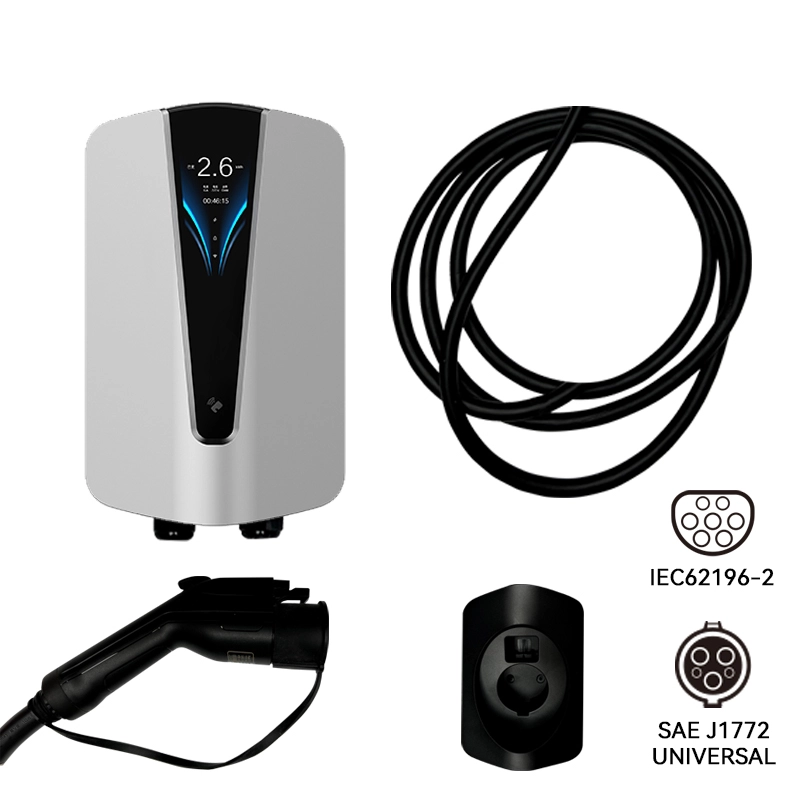
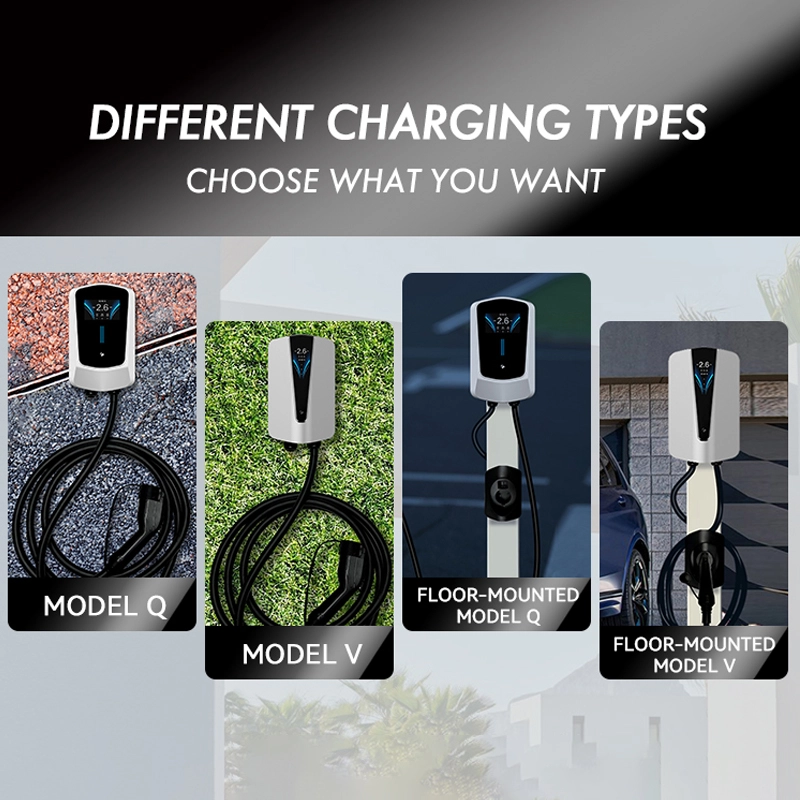
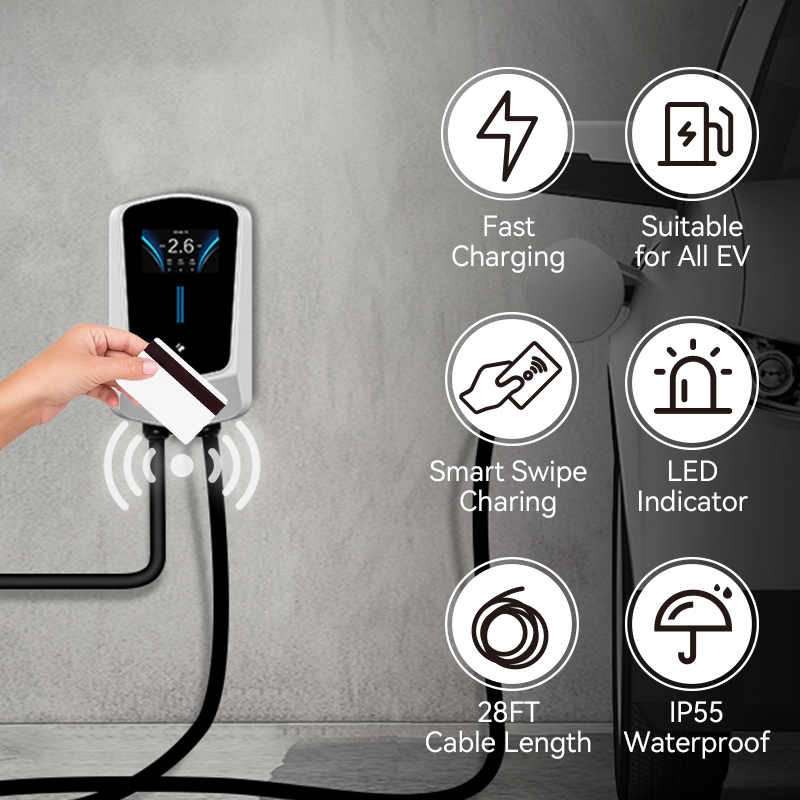
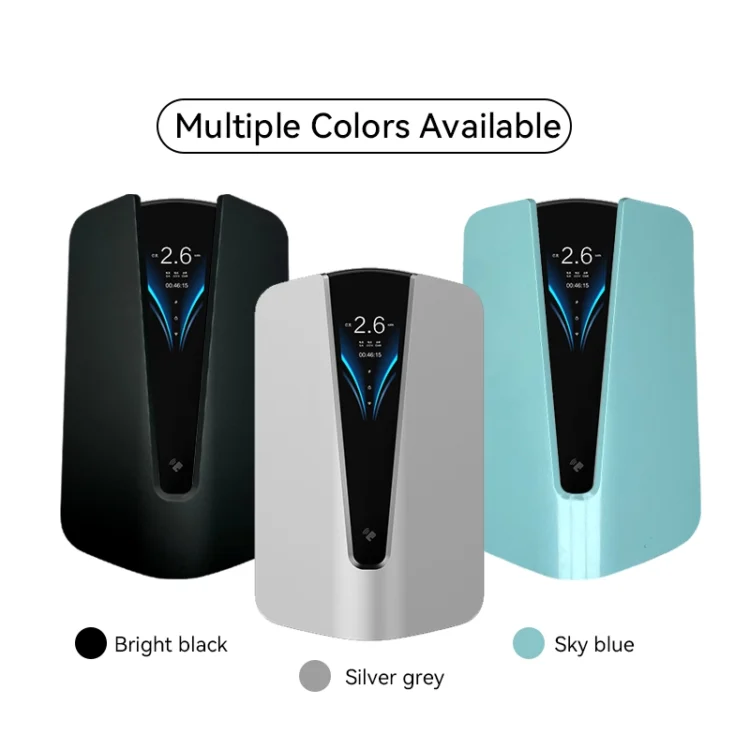
Ac Ev Charger Custom Type1 Type 2 GBT Plug Wall Mounted
Data | Model | Q6-EH07S4 | Q6-EH11S4 | Q6-EH22S4 |
Power | 7KW | 11KW | 22KW | |
Input | Power Supply | L+N+PE | L1+L2+L3+N+PE | L1+L2+L3+N+PE |
RatedVoltage | AC230V | AC400V | AC400V | |
Rated Current | 32A | 16A | 32A | |
Frequency | 50/60Hz | 50/60Hz | 50/60Hz | |
Output | Output Voltage | AC230V | AC400V | AC400V |
Output Current | 32A | 16A | 32A | |
Rated Power | 7KW | 11KW | 22KW |
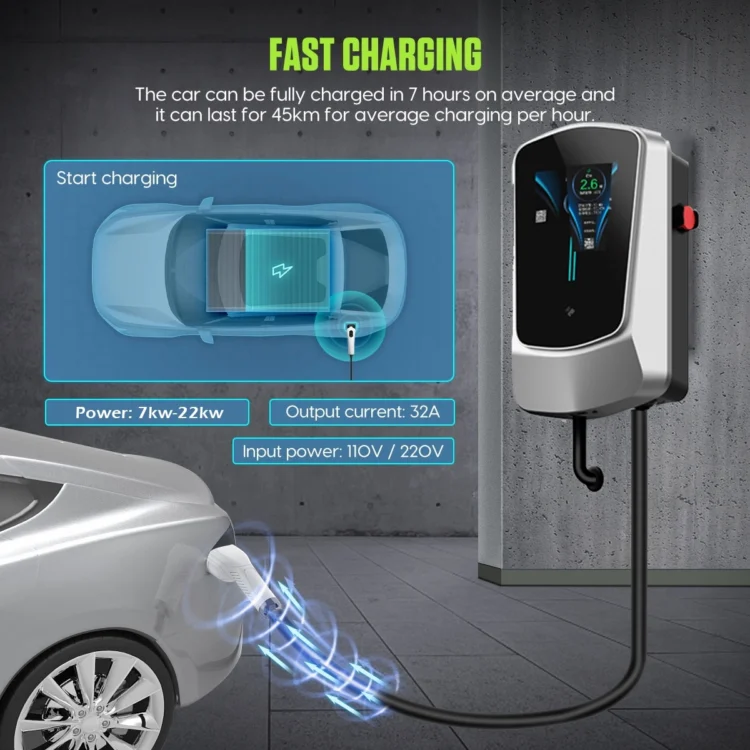
Fast Ac Ev Charger 7kw 11kw 22kw
A Fast AC EV Charger is a highly efficient charging solution for electric vehicles, offering different power outputs such as 7kW, 11kW, and 22kW to meet the needs of various users. Here’s a breakdown of the key features for each:
1. 7kW Fast AC EV Charger
Ideal for Home Charging: The 7kW charger is a great option for residential use, providing a balanced charging speed for most EVs.
Charging Speed: Typically, it can fully charge an electric vehicle in 4-8 hours depending on the car’s battery capacity.
Compatibility: Works with most EV models that support Level 2 AC charging.
Installation: Can be installed in a standard home garage or parking space, requiring a 32A power supply.
2. 11kW Fast AC EV Charger
Faster Charging: The 11kW charger delivers more power, cutting down the charging time for most electric vehicles.
Charging Speed: With this charger, an EV can typically be fully charged in about 3-6 hours.
Compatibility: Suitable for homes, offices, and public spaces where faster charging is needed.
Installation: Requires a 3-phase power supply (380V), making it ideal for commercial installations or homes with higher power capacity.
3. 22kW Fast AC EV Charger
Commercial Use & Public Charging: The 22kW charger is designed for high-demand locations like commercial buildings, parking lots, and public charging stations.
Charging Speed: This charger can fully charge an EV in approximately 1.5-3 hours.
Compatibility: Works with most modern EVs that support 3-phase charging.
Installation: Requires a 3-phase power supply and is ideal for areas with a high volume of vehicles needing quick turnaround times.
Key Benefits of Fast AC EV Chargers:
Efficiency: These chargers offer a more efficient charging process compared to standard Level 1 chargers.
Convenience: Perfect for both residential and commercial settings, reducing downtime for EV users.
Scalability: Suitable for a wide range of installations, from home garages to public charging stations.
In conclusion, the 7kW, 11kW, and 22kW Fast AC EV Chargers offer flexible, scalable, and efficient charging options to meet the growing demand for electric vehicles across residential and commercial markets. Whether you need to charge overnight at home or provide fast charging at a public station, these chargers ensure your EV is ready to go in no time.
11kw Ac Ev Charger Product Features
The 11kW AC EV Charger is designed to offer fast, efficient, and convenient charging with a variety of advanced features. Here are its key highlights:
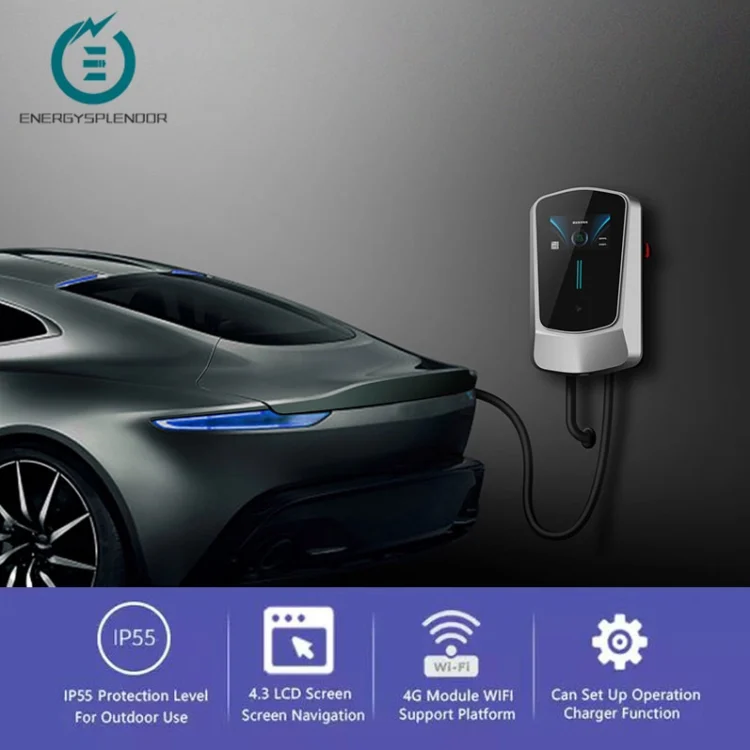
IP55 Protection Rating
The IP55 rating ensures that the charger is dustproof and water-resistant, making it suitable for outdoor and indoor installations. Whether it’s exposed to rain or dust, this charger can withstand various weather conditions, ensuring reliable performance over time.
4.3″ LCD Screen
Equipped with a 4.3-inch LCD screen, the charger provides an intuitive and user-friendly interface. This display shows vital information such as charging status, battery level, and other operational details, making it easy for users to monitor the charging process in real-time.
4G Connectivity
With 4G connectivity, the charger can be remotely monitored and managed. This feature allows users to check the status, perform diagnostics, and receive updates or alerts directly through a mobile app or web interface, enhancing convenience and ensuring smooth operation.
Wi-Fi Enabled
The charger is also Wi-Fi enabled, allowing it to connect to a local network for seamless communication with smartphones and other smart devices. This feature further expands the charger’s capabilities, offering easy control, software updates, and remote monitoring via the companion app.
Customizable Operation Settings
The operation charger function can be customized according to user needs. You can set charging schedules, adjust power levels, and configure other settings to optimize the charging experience based on time-of-day preferences or energy costs. This flexibility makes it an excellent choice for both residential and commercial use.
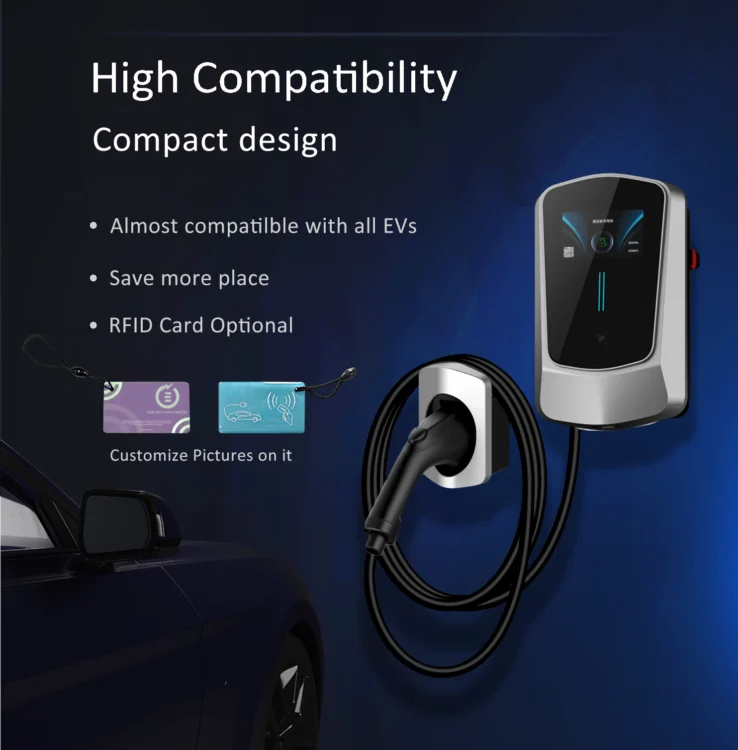
Ev Ac Charger Almost Compatilble With All Evs
The EV AC Charger is designed to be compatible with almost all electric vehicles (EVs), making it a versatile solution for a wide range of EV owners. Whether you’re driving a Tesla, Nissan, BMW, or any other popular brand, this charger supports universal connectors, ensuring a seamless charging experience for most electric cars. With Level 2 AC charging, it delivers efficient power for home or commercial use. Its user-friendly design, combined with features like fast charging, reliable performance, and wide compatibility, makes it a perfect choice for various EV models, offering convenience and peace of mind to all users.
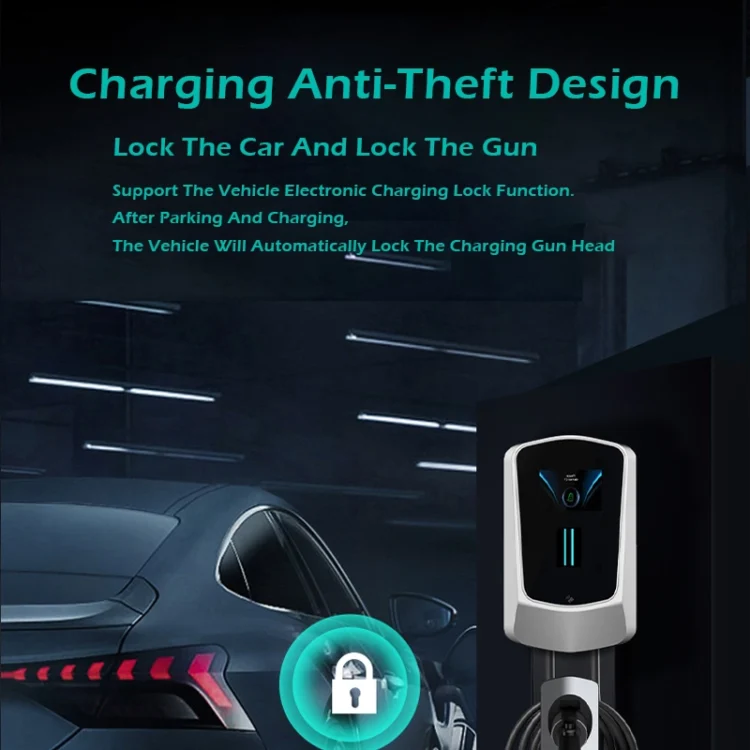
AC EV Charger Anti-Theft Design
The AC EV Charger is equipped with an anti-theft design to provide enhanced security and peace of mind for users. Key features include:
Locking Mechanism: The charging cable and connector can be securely locked to prevent theft while the vehicle is charging. This ensures that the charger remains safe and intact when not in use.
Durable Housing: Built with strong, tamper-resistant materials, the charger’s housing is designed to withstand physical damage, protecting both the unit and the wiring inside.
Smart Access Control: Some models feature access control systems, such as RFID cards or smartphone apps, which restrict unauthorized usage. Only authorized users can access the charger and start the charging process.
Alert System: The charger can send notifications or trigger alerts if any tampering or unauthorized actions are detected, ensuring immediate awareness.
With these anti-theft features, the AC EV Charger ensures maximum protection for your investment, preventing theft or damage while providing secure, reliable charging for your electric vehicle.
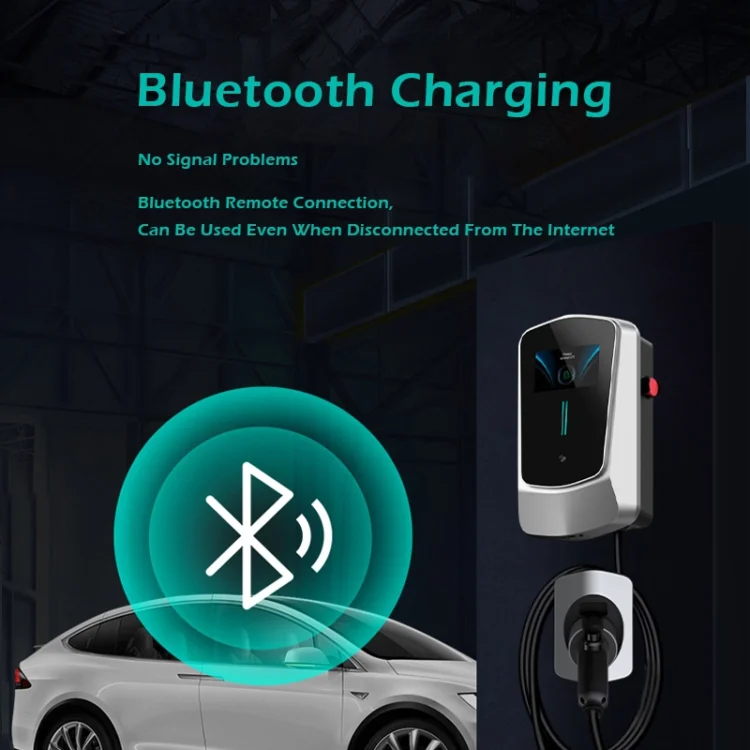
AC EV Charger Bluetooth Charging
The AC EV Charger with Bluetooth charging capability brings enhanced convenience and control to electric vehicle owners. Key features include:
Wireless Connectivity: The built-in Bluetooth feature allows users to connect their smartphone or tablet directly to the charger, enabling easy operation without needing a wired connection.
Remote Control: Using a mobile app, you can start, stop, or monitor the charging process from a distance. This provides flexibility and convenience, especially in residential or commercial settings.
Real-Time Monitoring: Through the Bluetooth connection, users can track essential charging information such as the charging status, battery level, and charging speed directly from their phone.
Scheduling and Notifications: The Bluetooth-enabled charger allows you to set charging schedules based on time preferences or energy rates, and you can receive notifications when charging is complete or if any issues arise.
User-Friendly Interface: The Bluetooth connection simplifies the user interface, making it easy to control and customize the charger’s settings, such as power levels or charging sessions, all via a mobile app.
Overall, Bluetooth charging on the AC EV Charger enhances ease of use, offering greater flexibility and a seamless experience for electric vehicle owners looking for smart, intuitive charging solutions.
Custom 7kw 11kw 22kw Ac Ev Charger Custom Type1 Type 2 GBT Plug
The Custom 7kW, 11kW, and 22kW AC EV Charger offers flexible and efficient charging solutions with support for multiple plug types, including Type 1, Type 2, and GBT, making it ideal for diverse EV models and international markets.
Key Features:
Customizable Power Options: Choose between 7kW, 11kW, or 22kW to meet different charging needs, from home use to commercial installations.
Type 1 Plug: Commonly used in North America and Japan, perfect for older EV models.
Type 2 Plug: Popular in Europe, offering faster charging for most modern electric vehicles.
GBT Plug: Designed for the Chinese market, ensuring compatibility with local EVs and infrastructure.
Whether for residential, business, or public charging stations, this Custom AC EV Charger is a versatile and reliable choice, offering efficient charging with a plug configuration tailored to your location and vehicle needs.
We installed the 11kW AC EV charger for our business, and it has been a great choice for daily charging needs. The charging speed is stable, allowing our EVs to fully charge overnight or during work hours, ensuring vehicles are always ready. The charger is user-friendly with clear indicators and easy plug-and-play operation, making it convenient for staff and customers. It is compact and well-designed, fitting perfectly in our parking area while working reliably in different weather conditions. Overall, this 11kW AC charger has improved our EV operations, providing a cost-effective and efficient charging solution.
“Meagan Mendoza”
We added an EV AC charger to our facility, and it has been an excellent solution for daily charging needs. The charger is reliable and provides stable charging for our EVs, allowing them to fully charge during work hours or overnight. It is easy to use, with a simple plug-and-play design and clear charging indicators, making it convenient for both staff and visitors. The unit is compact and durable, fitting well into our parking space while operating efficiently in various weather conditions. This EV AC charger has made our EV operations more convenient and cost-effective.
“Christopher Kelley”
We installed the 22kW AC EV charger at our facility, and it has been a great upgrade for our daily charging needs. The charging speed is efficient, allowing most EVs to charge within a few hours, making it perfect for workplace and customer use. The charger is user-friendly, with a clear display and simple plug-and-play operation, ensuring hassle-free charging for everyone. It has a sleek and compact design, fitting neatly in our parking area while operating reliably in all weather conditions. This 22kW AC charger has made our EV charging service faster and more convenient, helping us support sustainable transport.
“Kevin Walters”
We installed the 7kW AC EV charger at our site, and it has been a reliable option for our daily EV charging needs. The charging speed is stable, allowing vehicles to charge fully overnight or during work hours, making it ideal for both staff and customer use. The charger is easy to operate with a clear display and simple plug-and-play functionality, providing a smooth charging experience. Its compact and clean design fits well in our parking area and performs well in all weather conditions. The 7kW AC charger has helped us offer convenient, affordable, and efficient EV charging on-site.
“Sandra Vargas”
We installed AC chargers for EVs at our facility, and they have been a great addition for daily charging needs. The chargers provide stable and reliable charging, allowing EVs to fully charge during work hours or overnight, making them perfect for staff and customer use. They are easy to operate with clear indicators and a simple plug-and-play design, ensuring a hassle-free experience. The compact and clean design fits well in our parking area and performs efficiently in all weather conditions. These AC chargers have helped us offer convenient and cost-effective EV charging while supporting green energy goals.
“Hayley Zamora”
We have added AC charging for EVs at our facility, and it has been an excellent solution for daily charging needs. The chargers provide stable and consistent charging, allowing our EVs to fully charge during work hours or overnight, making it perfect for staff and visitors. The units are easy to use, with clear indicators and a simple plug-and-play design for a smooth charging experience. They are compact, durable, and work reliably in all weather conditions. Offering AC charging has made our EV operations more convenient and cost-effective, supporting our commitment to sustainability.
“Courtney Mcguire”
⚡ What is an AC EV Charger?
An AC EV charger is a device that supplies Alternating Current (AC) electricity to an electric vehicle (EV) to charge its battery.
Unlike DC fast chargers, which convert AC to DC within the charger, AC chargers deliver AC power to the car, where the vehicle’s onboard charger converts it to DC to charge the battery.
🔹 Key Characteristics:
✅ Power Range:
Typically 3.5 kW to 22 kW (Level 1 & Level 2 charging)
7 kW single-phase and 11/22 kW three-phase are most common for public and residential use.
✅ Charging Speed:
Slower than DC chargers
Takes 2–8 hours for a full charge, depending on battery size and charger power.
✅ Connector Types:
Type 1 (SAE J1772) – Common in the US, some Asian markets.
Type 2 (IEC 62196) – Common in Europe, Thailand, and many Asian markets.
✅ Installation Locations:
Homes, condos, offices, malls, hotels, and public parking areas.
✅ Cost:
Lower installation and hardware cost compared to DC fast chargers.
⚡ Is AC charging good for EV?
✅ Yes, AC charging is good for EVs, especially for daily and overnight charging needs.
🚗 Why AC Charging is Good for EVs:
✅ Battery Health:
AC charging is slower and gentler on the battery, reducing heat generation and preserving long-term battery health compared to frequent high-power DC fast charging.
✅ Convenience:
AC chargers allow you to charge at home, offices, malls, and hotels while your vehicle is parked, eliminating the need for special trips to charge.
✅ Cost-Effective:
AC chargers and installation are more affordable than DC fast chargers, making them practical for residential and commercial use.
✅ Grid Friendly:
AC charging can be scheduled during off-peak hours, balancing grid loads and reducing electricity costs.
✅ Adequate for Daily Needs:
For most EV users, overnight AC charging provides enough range for daily commuting and errands.
⚡ When AC Charging May Not Be Enough:
❌ Slow Charging: AC charging takes 2–8+ hours for a full charge, which may not be practical when rapid turnaround is needed during long trips.
❌ For long-distance travel or high-mileage fleet use, DC fast charging is recommended to save time.
✅ Summary:
AC charging is an excellent, battery-friendly, and practical charging method for most EV owners, providing cost-effective and convenient charging for daily use.
❓ Can I charge my EV while the AC is on?
✅ Yes, you can charge your EV while the vehicle’s air conditioning (AC) is on, but there are important considerations:
🚗 How It Works:
When you turn on the AC while charging, the AC draws power either:
Directly from the grid (via the charger) while charging, or
From the vehicle’s battery, depending on the EV model and charging status.
⚡ Key Points:
✅ Possible, but charging speed may reduce:
Some EVs prioritize cabin comfort during charging, reducing the power sent to the battery to run the AC.
This may slightly increase total charging time.
✅ Useful for pre-conditioning:
Many EVs allow climate pre-conditioning while plugged in, cooling the cabin without using battery power during driving.
✅ Energy Consumption:
Running the AC will consume extra electricity, but since the vehicle is plugged in, it will not reduce your driving range directly.
✅ Safety:
It is safe to use the AC while charging, and EV systems manage power distribution automatically.
🚩 Check Your EV Manual:
Some older models may have restrictions or limit AC functions while charging.
Most modern EVs (Tesla, BYD, Nissan Leaf, MG, Hyundai) allow climate control during charging.
✅ Summary:
Yes, you can use your EV’s AC while charging, but it may slightly slow charging and consume additional energy. It is safe and often used for pre-conditioning before driving.
What’s the difference between AC and DC EV charging?
🔹 1️⃣ Power Type
AC Charging (Alternating Current):
Supplies AC electricity to the vehicle, which the car’s onboard charger converts to DC to charge the battery.DC Charging (Direct Current):
Converts AC from the grid into DC inside the charger itself, then directly feeds DC power to the EV battery, bypassing the onboard charger.
🔹 2️⃣ Charging Speed
AC Charging (Level 1 & Level 2):
✅ 3–22 kW typical power
✅ 2–8+ hours for a full charge
✅ Suitable for homes, offices, malls, and overnight chargingDC Fast Charging (Level 3):
✅ 30–350+ kW typical power
✅ 15–45 minutes for 20–80% charge
✅ Used in highways, fleet operations, and fast-turnover public sites
🔹 3️⃣ Hardware Cost & Installation
AC Charging:
✅ Lower hardware cost ($500–$3,000 per unit)
✅ Lower installation complexityDC Charging:
❌ Higher hardware cost ($10,000–$150,000+ per unit)
❌ Requires heavy electrical infrastructure, sometimes utility upgrades
🔹 4️⃣ Use Cases
✅ AC Charging:
Daily commuting and overnight charging
Long-stay parking (malls, offices, apartments)
✅ DC Charging:
Long-distance travel
Fleets requiring quick turnaround
Highway rest stops and transport terminals
🔹 5️⃣ Connector Types
AC: Type 1 (SAE J1772), Type 2 (IEC 62196)
DC: CCS (Combined Charging System), CHAdeMO, Tesla Supercharger
✅ Summary:
| Aspect | AC Charging | DC Charging |
|---|---|---|
| Power Type | Alternating Current | Direct Current |
| Speed | Slow to moderate | Very fast |
| Power Range | 3–22 kW | 30–350+ kW |
| Charging Time | 2–8+ hours | 15–45 min |
| Cost | Low | High |
| Use Case | Home, office, malls | Highways, fleets |
⚡ AC charging is best for daily, low-cost, battery-friendly charging, while DC charging is used for fast top-ups during long trips or high-demand fleet operations.
⚡ How to Use an AC EV Charger
1️⃣ Prepare Your EV and Charger
Park your EV close to the charging station.
Make sure your vehicle supports the connector type (Type 1 or Type 2).
2️⃣ Connect the Charger
Take the charging cable from the station (or your own cable if it’s a home charger).
Plug the connector securely into your vehicle’s charging port.
3️⃣ Authenticate & Start Charging
Use the station’s app, RFID card, or payment terminal to authenticate if required.
The charger will communicate with your vehicle to start charging safely.
4️⃣ Monitor Charging
Check the charger display or your EV’s dashboard to see charging status and estimated time remaining.
Some chargers or apps send notifications when charging is complete.
5️⃣ Finish Charging
Once your EV battery is sufficiently charged or charging is complete, stop the session via app or station interface.
Unplug the charging cable from your vehicle and return it to the station holder.
6️⃣ Ready to Go
Close your vehicle’s charging port.
You’re ready to drive with a freshly charged battery!
⚡ Tips:
For faster charging, use a higher power Level 2 AC charger if your vehicle supports it.
Charge during off-peak hours if possible to save on electricity costs.
Always follow safety instructions provided by the charger manufacturer.
✅ Summary:
Using an AC EV charger is as easy as plugging in, authenticating, monitoring, and unplugging when done — ideal for daily and overnight charging.
How fast are AC EV chargers?
🔹 Charging Power:
AC EV chargers typically deliver between 3.5 kW and 22 kW of power.
The exact speed depends on the charger’s power rating and your vehicle’s onboard charger capacity.
🔹 Typical Charging Speeds:
Level 1 AC Charging (120V, ~1.4 kW):
Adds about 5–8 km (3–5 miles) of range per hour — very slow, mainly for emergency or overnight home use.
Level 2 AC Charging (220–240V, 3.5–22 kW):
Adds about 20–80 km (12–50 miles) of range per hour, depending on power and vehicle acceptance.
For example, a 7 kW charger might add ~30 km per hour, while a 22 kW charger can add up to ~80 km per hour.
🔹 Charging Time Examples:
A typical 40 kWh EV battery takes:
About 4–6 hours to fully charge on a 7 kW AC charger.
About 2–3 hours on a 22 kW AC charger (if the vehicle supports it).
🔹 Practical Use:
AC chargers are ideal for overnight charging at home or charging during long parking stays (work, shopping).
They are not designed for quick top-ups during short stops—for that, DC fast chargers are needed.
✅ Summary:
AC EV chargers typically charge at 3.5–22 kW, adding 20–80 km of driving range per hour, making them perfect for daily and overnight charging but slower than DC fast chargers.