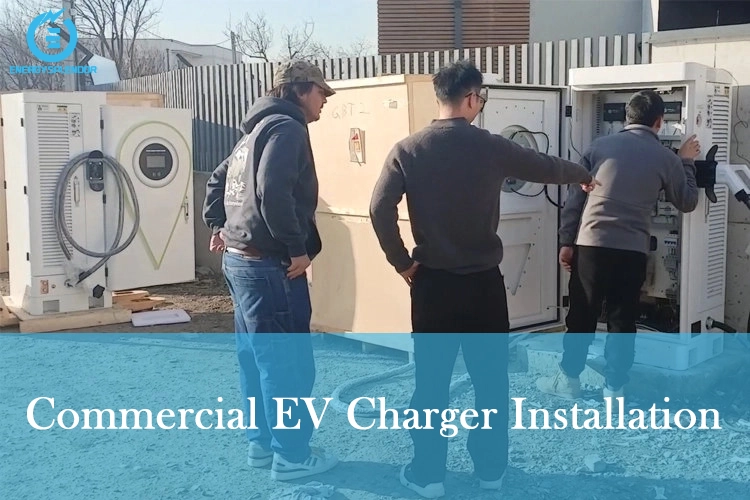
As electric vehicles continue to rise in popularity across Europe, Asia, South America, and the Middle East, the demand for reliable and scalable commercial EV charging solutions has become a top priority. Commercial EV charger installation is no longer just a future plan—it’s an essential part of business infrastructure for hotels, office buildings, shopping centers, logistics hubs, and more.
In this article, we’ll explore what goes into installing a commercial EV charging station, the cost of commercial EV charger installation, how to choose the right commercial EV charger installer, and what factors to consider before beginning a project.

Why Commercial EV Charging Station Installation Matters
From Madrid to Manila and from São Paulo to Dubai, EV adoption is accelerating. Commercial properties are now expected to provide EV charging as a service or amenity. Whether you’re a property developer, fleet operator, or business owner, installing a commercial EV charging station:
Enhances property value and market competitiveness
Attracts eco-conscious tenants and customers
Prepares your infrastructure for long-term sustainability goals
Complies with regional environmental initiatives and incentives
In regions such as the UK, the UAE, Kazakhstan, and Chile, national policies actively support EV infrastructure growth, further accelerating demand for commercial EV charger installation services.
Steps to Install Commercial EV Chargers
The process of commercial EV charging installation generally includes the following stages:
1. Site Assessment and Power Availability
Before installation begins, a certified technician will assess the site to determine available electrical capacity, ideal charger locations, and user access points.
2. Charger Selection and Compatibility
Choose between AC and DC chargers, depending on the required charging speed. Factors like plug types (Type 1, Type 2, or GBT) and vehicle compatibility must be taken into account.
3. Permits and Approvals
Countries like Germany, Saudi Arabia, and Indonesia may require local permits, utility company approvals, or safety certifications for EV charger installation commercial projects.
4. Installation by Certified Commercial EV Charger Installers
Always work with licensed commercial EV charger installers. This ensures safety, compliance, and future service support.
5. System Integration and Testing
Most commercial EV chargers offer smart features such as app control, usage tracking, and load management. Proper setup and testing are key to a smooth launch.
Commercial EV Charger Installation Cost Breakdown
The cost to install commercial EV charging stations depends on multiple variables, including charger type, installation complexity, infrastructure upgrades, and regional labor costs. Below is a general estimate:
| Installation Item | Estimated Cost Range (USD) |
|---|---|
| Basic AC Charger (7-22kW) | $1,500 – $3,000 |
| Fast DC Charger (50-150kW) | $10,000 – $40,000 |
| Installation Labor | $1,000 – $10,000 |
| Trenching & Electrical Upgrades | $2,000 – $20,000 |
| Network & Software Setup | $500 – $3,000 |
In markets such as the UK, the commercial EV charger installation cost UK average can range between £3,000 to £15,000 depending on whether it’s a wall-mounted unit or a dual-port fast charging station.
In India, Brazil, and Turkey, the cost tends to be lower due to reduced labor rates but may require longer lead times for component sourcing and grid approval.

Choosing the Right Commercial EV Charger Installer
Selecting a qualified commercial EV charger installer is crucial for long-term reliability and safety. Here’s what to look for:
Experience with multi-unit commercial charging systems
Familiarity with local electrical codes and grid connections
Offers support for maintenance and future upgrades
Certified by recognized authorities (e.g., CE, IEC, UL)
In Russia, UAE, and Malaysia, many businesses are turning to experienced regional installers who also understand government incentives and grid compliance requirements.

Common Challenges in Commercial EV Charging Installation
While the market is growing rapidly, challenges still exist:
Power limitations in older buildings (especially common in urban areas of Latin America and Southeast Asia)
Delays in permitting, particularly in bureaucratic regions
High cost of trenching or grid connection in remote or rural areas
Uncertainty in future EV standards, leading to hesitation in charger type selection
A skilled commercial EV charger installer can help overcome these by recommending scalable and modular solutions.
Long-Term ROI and Benefits
Though the cost of installing commercial EV charging stations may seem high at first, the return on investment includes:
Increased customer retention (especially in retail and hospitality)
Revenue generation via pay-per-use models
Government subsidies and green building incentives
Enhanced brand image as a sustainable business
In countries like France, Argentina, and Uzbekistan, government grants can offset a significant portion of commercial EV charging station installation cost.
Final Thoughts
The shift to electric mobility is global—and installing a commercial EV charging station positions your business at the forefront of this change. Whether you’re in Europe, Asia, the Middle East, or South America, early investment in EV infrastructure gives you a competitive edge.
To ensure success:
Plan early
Choose the right equipment
Hire experienced commercial EV charger installers
Monitor long-term ROI
The future is electric—and it starts with a smart, strategic installation.